

Ultimate Guide to Italy on F1 Race Weekend: Beyond the Grand Prix
Italy doesn’t just host a Grand Prix. Italy invented the Grand Prix. The country gave the sport its first proper purpose-built circuit at Monza in 1922, its most successful constructor in Ferrari, and a fan base – the Tifosi – so loud and so red that the rest of the F1® calendar borrows the word to describe its own.
For visiting fans, this means an Italian Grand Prix package weekend offers something nothing else on the schedule can match: motorsport in the country that takes it most personally.
The race itself is the Italian Grand Prix at the Autodromo Nazionale Monza, just outside Milan. But the weekend extends beyond the grandstands into Milan’s restaurants, the hills of Lake Como, and a south-east detour into Motor Valley where Ferrari, Lamborghini, Maserati and Ducati all have their factory doors.
At a Glance: The Italy F1 Race Weekend in 30 Seconds
The headlines for anyone planning a Monza trip:
- Race weekend (TBC for 2027): Expected early September, mirroring the 2026 race date of 4–6 September.
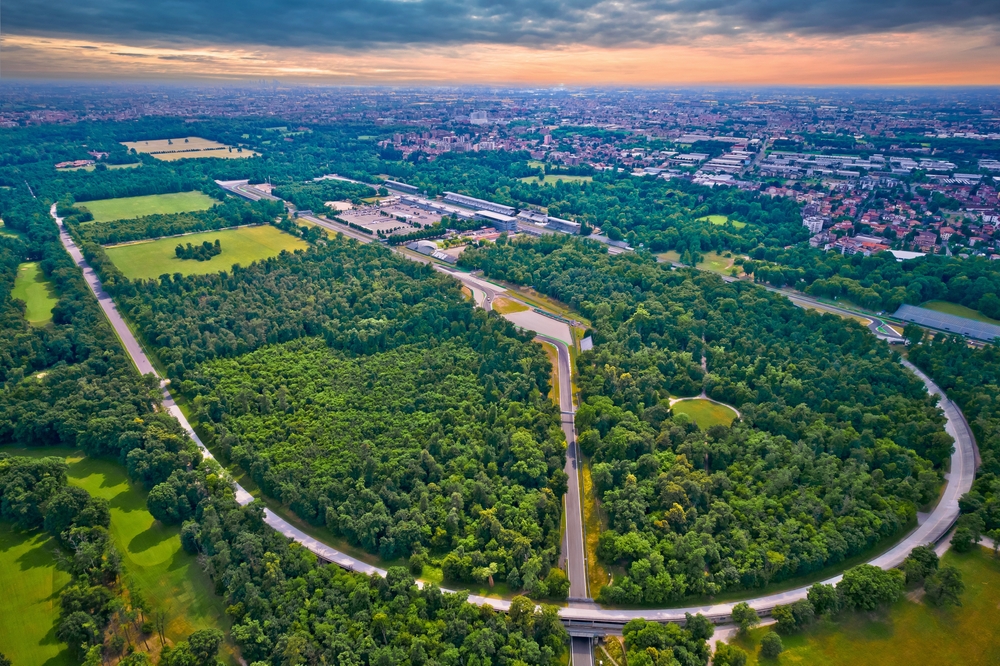
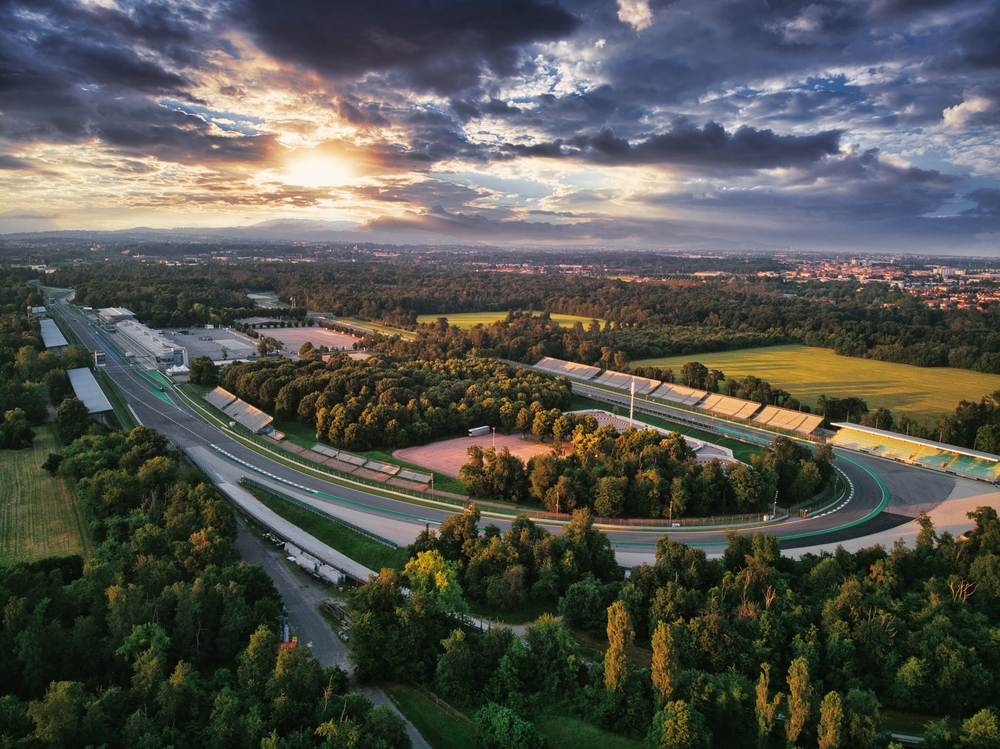
- The circuit: Autodromo Nazionale Monza — 5.793km, 11 corners, the third-oldest purpose-built race track in the world and the spiritual home of F1.
- The atmosphere: The Tifosi. Tens of thousands of Ferrari fans, smoke flares, Forza Ferrari chants, and a post-race track invasion if a Ferrari finishes on the podium.
- Where most fans base themselves: Milan, 15km south of the circuit and easily reached by train (S8/S9/S11 lines, 20 minutes).
- Pick of the grandstands: Tribuna Centrale for the start/finish drama, Grandstand 8 for overtaking at Turn 1, Grandstand 22 for the Parabolica, Grandstand 15 for the Ascari chicane.
- Beyond Monza: the Ferrari Museums in Maranello and Modena, a track-walk pilgrimage to Imola, plus Lake Como an hour up the rail line for the recovery day.
Why is the Italian Grand Prix the Heart of an Italy F1 Race Weekend?
Strip away the F1 marketing for a moment and Monza is, by any measure, the most historically important venue in the sport.
The track opened on 3 September 1922 – just six days before it hosted its first Italian Grand Prix – and has staged the race every year since 1950 with one solitary exception. Six other countries have hosted F1 since the World Championship began; only Italy has done it without interruption.
That weight is what an F1 race weekend in Italy trades on. Monza feels different from every other venue you can watch F1 at, and the reasons sit in three places:
- The speed is real, and it shows. Monza records the highest average lap speeds on the calendar. Drivers reach 340km/h on the back straight, brake from speed three times a lap into Variante Goodyear, Variante della Roggia and the Ascari chicane, and treat the Parabolica as a corner taken almost flat.
- The Tifosi are an active part of the weekend. Other circuits have passionate fans. Monza has a religious congregation. The grandstands turn red on Friday morning and stay that way until Sunday night. If Ferrari wins, the track invasion below the podium is one of the great sights in sport.
- Italy treats this race as a national event. Restaurants, bars and hotels right across Milan run Grand Prix programmes. Drivers do public appearances in Piazza Duomo. The whole region pulls into the weekend in a way few other host cities manage.
You can pick another race for the glamour or the night-time spectacle. For sheer racing heritage and unfiltered fan passion, the Italian Grand Prix sits in its own category.
Italian Grand Prix: Dates, Schedule and the Temple of Speed
Monza’s contract runs through until 2031, and the race historically sits on the first weekend of September. The 2026 race is scheduled for Friday 4 – Sunday 6 September.
If you pencil in the first weekend of September 2027, you’ll be very close to the eventual date.
The weekend runs to the standard F1 format:
| Day | Sessions |
| Friday | Free Practice 1, Free Practice 2 |
| Saturday | Free Practice 3, Qualifying |
| Sunday | Italian Grand Prix |
Most fans we look after travel Thursday-to-Monday from the UK, which lines up neatly with Milan as a base and leaves room for a Ferrari Museum day or a trip up to Lake Como. Our F1 calendar page tracks how Monza slots into the rest of the season.
Insider note: Saturday qualifying is the day to be on-circuit if you can only pick one. The Tifosi turn up in numbers, the timing of the sessions means cars are out in the cooler late afternoon, and Ferrari traditionally runs a special livery or commemoration that’s worth seeing in person.
Best Grandstands at the Monza Italian Grand Prix
Monza isn’t the most complicated grandstand decision on the F1 calendar – but it isn’t the simplest either. The track is essentially three straights joined by chicanes, with two genuine corners (the Lesmos and the Parabolica).
Pick your seat by what kind of viewing you want: high-speed cornering, heavy braking and overtaking, podium drama, or a sea-of-red Tifosi base camp.
A few of the standout options:
Tribuna Centrale: Best for the Start/Finish Straight
Tribuna Centrale (Grandstand 1) runs along the main straight opposite the pit lane and is the largest single seating block at the circuit. You’re on top of the lights-out launch, every pit stop, the run into Variante del Rettifilo and the podium. It’s the obvious first pick for anyone visiting Monza for the first time.
- View: Start/finish straight, pit lane, podium, run into Turn 1.
- Vibe: Tense and tribal. The closest grandstand to the Ferrari garage and the loudest section of the circuit on race day.
- Best for: First-time visitors, Ferrari fans, anyone who has to see the podium.
Grandstand 8 (Variante del Rettifilo): Best for Overtaking
Grandstand 8 sits on the outside of the first chicane at the end of the main straight. Cars arrive here at 340km/h, brake violently for the left-right flick and dive for the apex – which is exactly where the lap’s most likely overtake happens. The grandstand at the Variante del Rettifilo is the Monza spot for action seekers.
- View: End of the start/finish straight, Turn 1 braking zone, Turn 2 exit.
- Vibe: Pure adrenaline. Brake-test, lock-up, divebomb territory.
- Best for: Action photographers, fans who want to see overtakes.
Grandstand 15 (Ascari Chicane): Best for High-Speed Driving
The Ascari chicane is the corner where Monza really tests a driver – a quick left-right-left flick taken at speed, immediately following the long forest straight. Grandstand 15 puts you in the middle of the complex, watching cars wrestle through.
The chicane is named for double World Champion Alberto Ascari, who lost his life here in 1955 – a piece of history every Italian F1 race weekend visitor should know.
- View: Ascari chicane in its entirety.
- Vibe: Technical, fast, slightly less manic than the chicane grandstands at Turn 1.
- Best for: Driving purists, fans who like watching racecraft.
Grandstand 22 (Parabolica / Curva Alboreto): Best for Pure Speed
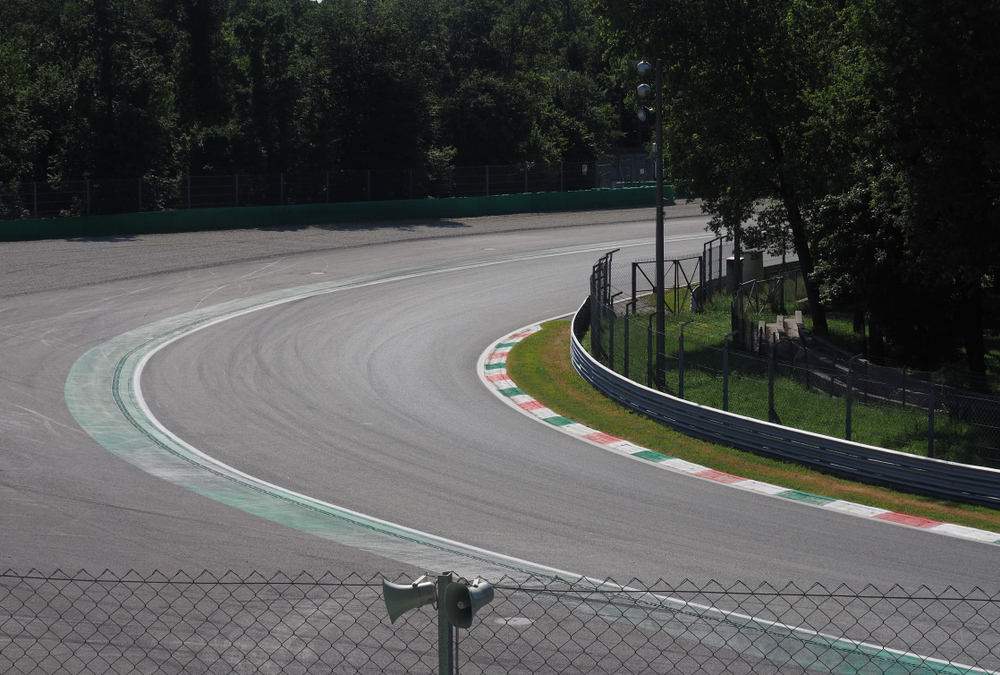
The Parabolica – officially Curva Alboreto since 2021 – is the long, sweeping right-hander that returns cars to the main straight. Grandstand 22 sits on the outside of the corner, with cars arriving at 340km/h, scrubbing speed through the long radius, and accelerating away into the lap.
The neighbouring Grandstand 21A is the budget alternative, with a similar view at a softer price.
- View: The whole of the Parabolica, with cars on the limit.
- Vibe: Sweeping, scenic, an arena-style atmosphere.
- Best for: Driving fans, photographers chasing the panning shot.
Monza Grandstand Comparison
| Grandstand | Highlight | Atmosphere | Best For |
| Tribuna Centrale | Start/finish, pits, podium | Tribal, loud | First-timers, Ferrari fans |
| Grandstand 8 | Turn 1 chicane, overtaking | Adrenaline-packed | Action seekers |
| Grandstand 15 | Ascari chicane | Technical, fast | Driving purists |
| Grandstand 22 | Parabolica | Sweeping, panoramic | Cornering and photography |
Our dedicated Monza circuit guide walks through every grandstand at the Autodromo Nazionale in more detail, and the broader F1 circuit guide puts Monza in context with every other track on the calendar.
The right Monza grandstand for a Ferrari die-hard isn’t the right one for a couple bringing a young child to their first F1 race. If you’d like a sanity check before booking, send us a quick note – we’ll point you at the seats that suit the trip you’re actually taking.
What Does an Italy F1 Race Weekend Feel Like in the Tifosi Stands?
If you’ve only ever watched the Italian Grand Prix on television, the on-the-ground experience will reshape what you think a race weekend can feel like.
The Tifosi are F1’s loudest, most committed fan community – the Italian word translates loosely as “supporters”, but the closer English equivalent is “ultras”.
A few things that visiting fans should know before walking through the gates:
- The grandstands turn red on Friday morning. Free practice at most circuits is sparsely attended. At Monza, Friday FP1 routinely pulls a six-figure crowd. Practice is part of the show.
- The smoke flares are a tradition. Red, white and green flares appear after every Ferrari highlight – at qualifying, at the start, after a podium. Allergies and asthma sufferers, take note.
- The chants don’t stop. “Forza Ferrari”, drum lines, hand-painted banners. You’ll see flags passed across the crowd that take twenty people to hold up.
- The post-race track invasion is real. If Ferrari finishes on the podium, security barriers around the start/finish straight are opened and the Tifosi flood onto the track to watch the celebrations from below. This is one of motorsport’s iconic images and it happens every year.
This is part of what people pay to come to Monza for. If you’re hoping for a contemplative, polite, German-style Grand Prix experience, the Italian Grand Prix isn’t your race. If you want a weekend where the crowd is genuinely a participant in the event, this is the one.
Where to Stay for the Italian F1 Race Weekend: Milan, Monza and Lake Como
Almost nobody actually stays in Monza for the Italian Grand Prix. The town is compact, the hotel inventory is short, and what little is available tends to be hoovered up year after year by team personnel and trackside contractors. Visiting fans usually base themselves elsewhere and commute in on race-day shuttles or the suburban train.
The realistic options:
- Milan. The default base, and the one we recommend most often. Trains from Milano Centrale, Porta Garibaldi or Lambrate get you to Monza station in around 20 minutes (lines S8, S9 and S11), and there’s a shuttle bus from Monza station to the circuit on race weekend. The city is one of Europe’s great destinations in its own right – food, fashion, the Duomo, La Scala – so a long weekend works without ever feeling like a compromise.
- Monza town. Limited but possible. Locanda San Paolo and a small handful of independent hotels offer rooms within walking distance of the circuit. Book very early.
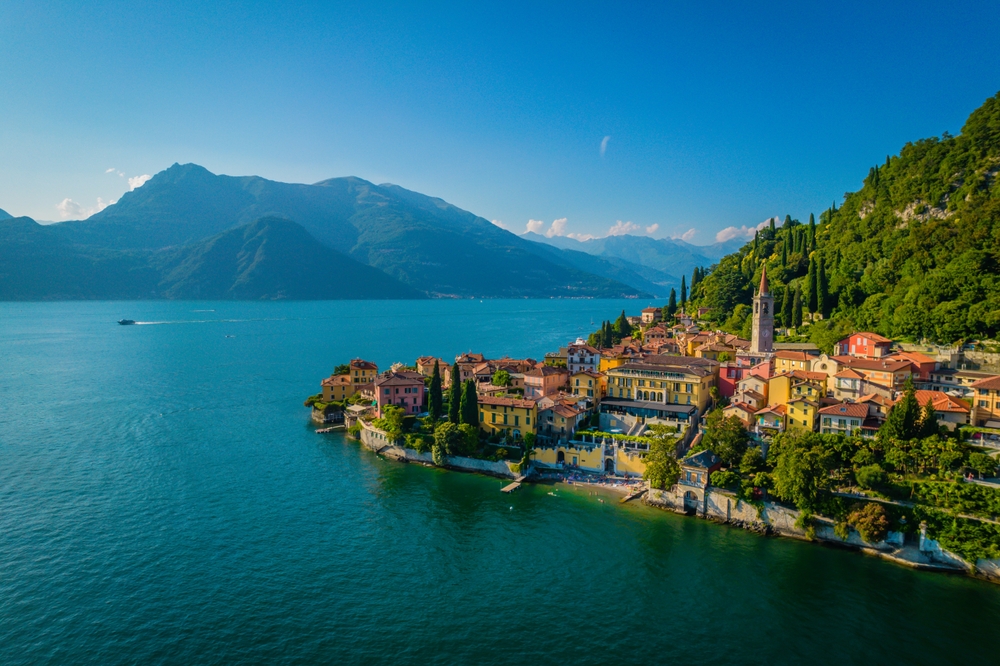
- Lake Como. An hour north of Milan by train. The lake towns – Como, Bellagio, Varenna – make a beautiful pre- or post-race base for fans who want the Italian holiday alongside the racing. Best paired with a rental car or driver for race-day transfers.
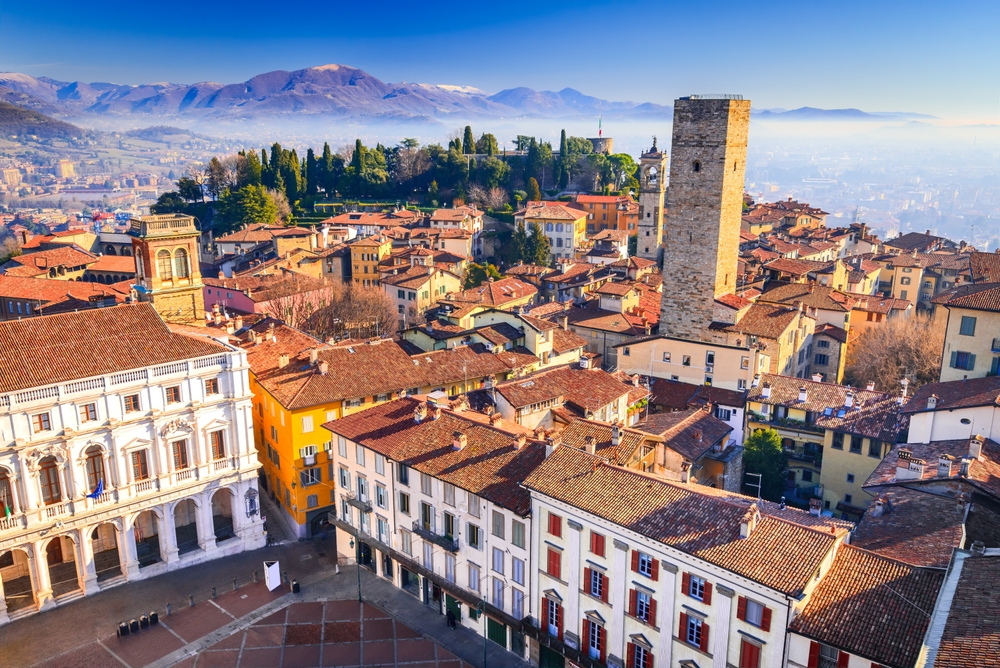
- Bergamo. A medieval hill town 50km east of Milan, with its own international airport. Less time in the city, more time looking out over the Po Valley. A useful alternative if Milan hotels are full or expensive.
- Camping Autodromo. The on-circuit campsite, located next to Prima Variante. Affordable, atmospheric and very much a part of the Tifosi experience. Strictly for fans who actively want the campsite version of race weekend.
Hotel choice is one of the most consequential decisions of the weekend, which is why we vet every property we book into – proximity to a Monza-bound train line, English-speaking front desk, and the kind of group rates that aren’t on offer through public booking sites.
For fans wanting the upgraded version of the trip – paddock walks, hospitality suites, premier Milan addresses – the Italian F1 VIP packages we put together each year bundle all of it into a single itinerary.
Where to Eat and Drink During an Italian F1 Race Weekend
Eating well in Italy on F1 weekend is genuinely difficult to get wrong – you’re in Milan, after all. But race week makes some restaurants harder to get into than others, and a little local knowledge goes a long way. Our shortlist is split by city and by what you’re after.
Best Restaurants in Milan for Italian Grand Prix Weekend
- Penelope a Casa. Opened by former F1 driver Vitantonio Liuzzi. A homely, classic Italian menu and a guest list that quietly fills with team principals and engineers across race week.
- Trattoria Masuelli San Marco. A hundred-year-old institution serving definitive Risotto alla Milanese. Half an hour’s walk from the centre and worth the diversion.
- Ratanà. Modern Lombard cooking in a Liberty-style villa in Porta Nuova. Refined without being stiff.
- Pizza Big. Loud, casual, vintage motorsport memorabilia on the walls and very large pizzas. The right place for a group dinner on Friday night.
Aperitivo Spots Worth Race-Week Time
Milan invented the aperitivo. Drop into any of these for an early-evening drink before dinner:
- Bar Basso. Inventor of the Negroni Sbagliato in 1972. A piece of cocktail history five minutes from Loreto.
- Camparino in Galleria. The original Campari bar, inside the Galleria Vittorio Emanuele II. Touristy, but unmissable on a first Milan visit.
- Terrazza Aperol. The Aperol Spritz from above, with a Piazza Duomo view.
Pro tip: Italian restaurants don’t typically have the same six-month booking window you’ll find in Monaco – but race-week tables for the better places do disappear fast. Lock in dinner reservations as soon as your hotel is confirmed, and never assume you can walk into anywhere on the Brera strip on a Saturday night in September.
Italy F1 Race Weekend Pilgrimages: Imola, Maranello and the Ferrari Museums
Italy’s relationship with motorsport doesn’t begin and end at Monza. For the fan with a spare day or two, three pilgrimages sit within easy reach of an Italian F1 race weekend, and any one of them adds something to the trip the race itself can’t.
The Ferrari Museums in Maranello and Modena
Ferrari runs two museums – one in Maranello, attached to the factory, and one in central Modena built around Enzo Ferrari’s birthplace. A combined ticket gets you into both within a 48-hour window, with a shuttle bus connecting the two.
- Museo Ferrari Maranello. The Formula 1 cars, the historic GTs, the Fiorano test track and a working pit-stop simulator. The 45-minute factory bus tour is the highlight if you can secure a slot.
- Museo Enzo Ferrari Modena. A modernist yellow pavilion next to Enzo’s actual birthplace, telling the story of the man as much as the marque.
Both sit in Emilia-Romagna, about three hours from Milan by car. The neat trip is Milan → Modena → Maranello → Bologna over two days, ideally on the days before race weekend rather than after.
Imola: A Pilgrimage Without a Race
Imola was dropped from the F1 calendar after the 2025 season. The Autodromo Enzo e Dino Ferrari is still very much open, though, and the circuit remains one of the most affecting places to visit in motorsport – the Senna and Ratzenberger memorials at Tamburello and Villeneuve are part of any fan’s pilgrimage. Our Imola circuit guide covers the layout and the memorial walks in detail.
If F1 returns to Imola in a future season – which the Emilia-Romagna region is actively campaigning for – our Emilia Romagna Grand Prix packages will be back on sale the day the contract is announced.
Motor Valley: The Wider Tour
Beyond Ferrari, the Emilia-Romagna region also hosts the factories and museums of Lamborghini (Sant’Agata Bolognese), Maserati (Modena), Pagani (San Cesario sul Panaro) and Ducati (Bologna). The whole area is marketed as “Motor Valley” by the regional tourist board and is the most concentrated stretch of motorsport heritage on earth.
For fans extending their Italy F1 race weekend by a few days, the full Motor Valley loop can be built into one of our Italian F1 VIP packages – usually as a Thursday or Monday add-on either side of the race itself.
What Should You Pack for an Italian F1 Race Weekend?
Early September in Lombardy is warm but not Mediterranean – daytime temperatures generally sit between 22°C and 28°C, with cooler evenings and a meaningful chance of an afternoon thunderstorm. You’ll spend most of the weekend walking the Monza park between grandstands, so pack with that in mind.
Our essential F1 race weekend travel tips cover the logistics in more depth; the wardrobe shortlist is:
- Sensible footwear. The Monza park is 6km² of partly-paved, partly-wooded ground. Trainers or walking shoes are non-negotiable.
- A light layer. Mornings and evenings cool quickly. Pack a hoodie or a packable jacket for early sessions and the train home.
- A waterproof. September thunderstorms come in fast and clear out the same way. A packable rain shell beats an umbrella inside the circuit.
- Sun cream and a cap. The Italian September sun is stronger than the temperature suggests, particularly during long Saturday qualifying sessions.
- Ear protection. Modern engines aren’t as loud as the V10s, but full sessions still take their toll. Bring plugs for any kids in the group.
- Cash and a contactless card. Most circuit vendors take cards now, but smaller bars in Monza town are still cash-only.
Monza is a popular choice for a first Grand Prix – the Italian atmosphere, the train link, the food – so if this is your debut, the first-time F1 attendee guide on the blog is worth a read alongside this one.
How to Spend Extra Days in Italy After the Grand Prix
The fans who get the most out of an Italian F1 race weekend treat the race as one stop in a longer trip. The country gives you a Michelin city, an alpine lake and a motorsport pilgrimage within a two-hour radius of Monza, and they’re all worth the extra night.
The day trips we recommend most often:
- Lake Como. An hour north of Milan by train. Bellagio, Varenna and Tremezzo for the lakeside hotels and the views; Como town for the Cathedral and the funicular up to Brunate. A proper recovery day after the Italian GP.
- Milan beyond the Duomo. Most fans see the Duomo and the Galleria. The rest of the city – the Brera artists’ quarter, the Navigli canals, the rooftop bars in Porta Nuova – is best enjoyed Sunday evening or Monday.
- The Ferrari Museums. Covered above. The combined ticket and the Fiorano factory bus tour are the must-dos.
- Bergamo Alta. The walled medieval upper town of Bergamo, accessed by funicular. Half a day, brilliant lunch options, the view from the city walls is one of the best in Lombardy.
- Verona. Two hours east of Milan by high-speed train, in time for an evening opera at the Roman Arena if you’re there during the summer programme.
Book Your Italy F1 Race Weekend Package
An Italy F1 race weekend isn’t a trip you cobble together piece by piece – not unless you’ve done it five times before and have the local contacts to back it up. Train timetables, race-week traffic, restaurant calendars and the rapidly shrinking Milan hotel inventory all reward booking through someone who’s already worked the weekend.
Our Italian Grand Prix packages cover the full bookable list: flights from your home airport, transfers, hotels in central Milan, official Monza grandstand tickets and circuit transfers on race day. VIP options add paddock access, hospitality suites, helicopter transfers and Maranello visits. Every package is ATOL and ABTOT protected – book with the confidence that comes with that.
Want to talk it through with someone who’s been there? Drop our team a message – share your group size, your priorities and your dates, and we’ll come back with a Monza weekend built to fit.
Italy F1 Race Weekend FAQs
When is the Italian Grand Prix in 2027?
The official 2027 F1 calendar hasn’t been published yet, but Monza is contracted through 2031 and historically takes the first weekend of September. Expect the 2027 race to fall on or around 3–5 September 2027.
Is Imola still part of the F1 calendar?
No. The Emilia Romagna Grand Prix was dropped from the 2026 calendar and isn’t on the 2027 schedule either. The Autodromo Enzo e Dino Ferrari is still open as a circuit for track days, historic events and museum visits – and the Senna and Ratzenberger memorials remain a worthwhile pilgrimage for any fan.
How do you get from Milan to Monza for the Italian Grand Prix?
The simplest route is the suburban train. Lines S8, S9 and S11 from Milano Centrale, Porta Garibaldi or Lambrate reach Monza in roughly 20 minutes. From Monza station, a dedicated shuttle bus (sometimes called the Black Shuttle) runs to the circuit gates on race weekend, with bus 204 and bus 221 as regular alternatives. The combined train-and-shuttle ticket sits around €10.
Which Monza grandstand should I book?
It depends on what you want from the weekend. Tribuna Centrale puts you in front of the pits and the podium and is the popular first choice. Grandstand 8 is the spot for overtaking and the Turn 1 chicane. Grandstand 22 (with 21A as the budget alternative) covers the Parabolica. Grandstand 15 sits at the Ascari chicane for high-speed cornering.
What’s the atmosphere actually like at Monza?
Loud, red, and unlike anywhere else on the calendar. The Tifosi turn up in numbers from Friday morning, flares appear every time Ferrari shows pace, and a Ferrari podium finish triggers a track invasion during the cool-down lap. Visiting fans are part of the show, not separate from it.
Are the Ferrari Museums worth a day trip from Milan?
Yes – they’re three hours south by car, and they pair brilliantly with a stay in Modena or Bologna. A combined ticket gets you into both Museo Ferrari Maranello and Museo Enzo Ferrari Modena within 48 hours. If you can secure a slot, the 45-minute Fiorano factory bus tour from Maranello is the highlight.
Where do most Italian Grand Prix visitors stay?
Milan, almost always. The 20-minute train link makes it a far easier base than Monza itself, and the city’s hotel inventory is several orders of magnitude larger. Lake Como, Bergamo or Como town work if you’d prefer a holiday base; Camping Autodromo at the track is the experience-led alternative.